

Rory McIlroy led the 2026 Masters by 6 strokes after 36 holes last Friday evening - the biggest margin in 90 years of tournament history at the halfway mark.
Then came Day 3: three bogeys, a double bogey, his entire lead erased. He entered the final round tied for first.
Day 4 started worse. More erratic play. By hole 6, McIlroy was multiple shots back.
Everyone has a version of this in recruiting.
You sent 50 emails. Zero responses.
You played well at a showcase. The coaches who said they’d watch didn’t show.
Your top school went quiet after months of consistent contact.
You watch Instagram as teammates commit to schools you thought were recruiting you.
The question isn’t whether recruiting will go sideways. It’s what you do when it does.

Stop the descent
As Brad Stulberg wrote, McIlroy’s demeanour stayed remarkably consistent through the ups and downs of his Masters weekend:
Throughout McIlroy’s collapse and recovery, one thing remained constant: No thrown clubs. No screaming or shouting. No poor body language. Just a relentless focus on the next shot - whether it was from the sand, wood chips, gallery, behind a tree, or whatever other predicament he found himself in. He hung in there. He stopped the descent. He prevented his bad holes from becoming awful holes.
What most families do when recruiting goes quiet:
Panic-email new schools they haven’t researched
Lower their target list overnight
Abandon the process that got them this far
Convince themselves they’re not good enough
This is outcome thinking. When the outcome isn’t happening, you spiral.
Don’t let a quiet month become a lost year.
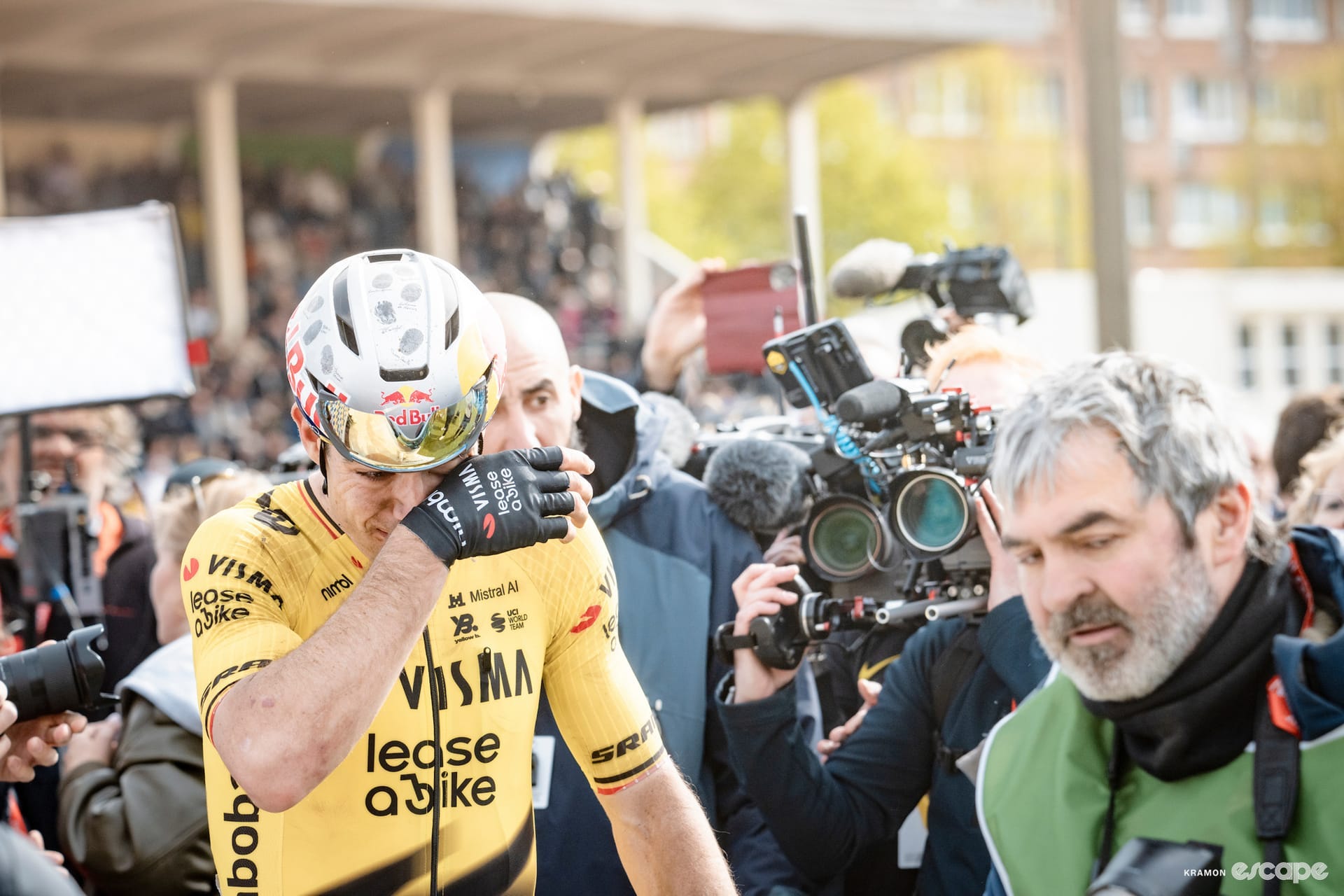
The same weekend, 600 miles away, Wout van Aert won Paris-Roubaix - one of cycling’s most brutal one-day races - after years of near-misses and setbacks.
The interviewer said: “You never stopped believing.”
Van Aert corrected him: “I did, I did stop believing. But then the next day I woke up and fought for it again.”
That’s the point.
You don’t have to be positive all the time. You don’t have to pretend setbacks don’t hurt.
But you do have to show up the next day and do the work anyway.
Process over prize
Throughout the final round, McIlroy kept pulling himself back to a simple mantra: “Process over prize.”
Not “I need to win.” Not “I can’t let this slip away.” Just focus on the next shot.
Here’s why that works: When you fixate on outcomes you can’t control - winning, getting offers, where you’ll commit - your brain treats it as a threat. You get anxious. You second-guess. You tighten up.
When you focus on what you can control - your next email, your next conversation, your next training session - your brain treats it as a challenge. You stay present. You stay engaged.
The difference shows up in performance. Research consistently finds that outcome-focused athletes experience more anxiety and perform worse under pressure. Process-focused athletes stay calmer and execute better when it matters.
But here’s the catch: You can’t just call upon a process mindset when recruiting goes sideways and expect it to work.
McIlroy didn’t develop that mantra on the back nine at Augusta. It’s been his practice for years. When things were going well, when things were falling apart, same focus: the process.
It famously took years for him to get the desired outcome; he blew a four-shot lead at the Masters in 2011, and lost while playing in the final group in 2018. He only got over the line in 2025, but now he’s one of just four back-to-back winners ever.
The families who weather recruiting adversity are the ones who’ve been doing the work all along. They communicate consistently, not just when panicking. They develop skills year-round, not just before showcases. They build relationships, not just send transactional emails when they need something.
What process actually means in recruiting
It’s not “stay positive” or “trust the journey” or “it’ll work out.” Those are platitudes, not process.
Process is sending one well-researched email per month to schools on your target list. Having one conversation with your club coach about feedback from coaches. Working on one technical weakness coaches have identified. Watching film of one game with a notepad and some intention.
Small actions. Repeated. Regardless of immediate results.
You can’t control whether coaches respond. You can’t control who enters the transfer portal. You can’t control when a program has budget or roster spots. Sometimes you do everything right, and the outcome still doesn’t go your way.
All you can control is your process. How you show up in the next moment. The next action you take.
The bottom line
Van Aert stopped believing. Then woke up and fought for it again. McIlroy focused on the next shot, not the prize.
Both won. Not because adversity didn’t hit them. Because they knew what to do when it did.
The process doesn’t guarantee the outcome. But it gives you the best shot at it.
When recruiting is going well, focus on the process. When recruiting isn’t going well, focus on the process.
One part of the process that families consistently get wrong is communication. Not because they don't try - because they don't know what to say, or when, or how to say it without sounding like every other recruit in a coach's inbox. I put together 20 templates covering the situations you'll actually face across two years of recruiting - frameworks that give you the right structure while keeping your own voice.
Want more help? I built an AI agent trained on all my writing and knowledge that can answer your recruiting questions 24/7 — with a 7-day free trial